Red Worm Composting E-Mail Archive
"Worm Shorts - 05/31/2023"
Hi Everyone,
Today I've got a quick wood chip update, and a cool in-ground system idea from Larry. Oh, and a worm limmerick from Chat GPT. ;-)
My Simple Wood Chip Projects (So Far) - I've been giving some extra attention to my 3 bonus heaps of wood chips. Again, these are just extra mounds sitting in beds where chips had already been laid down. Firstly, I've been burying kitchen scraps down in the heap sitting in front of my backyard composters. Secondly, I've been collecting worm-friendly graywater and pouring it over the heaps as well.
The idea is to enhance the internal habitat for worms and other critters, and to help accelerate the decomposition process. It's been very dry this month, and it's starting to get hot, so I need all the help I can get. Similar to the last time I did this graywater collecting (when I had an active vermi-filtration barrel in my yard), I've been reminded of just how much extra, perfectly usable, water ends up down the drain! And I'm really only scratching the surface here.
Next on the agenda, I'll be harvesting lots of weeds that are still popping up all over my property (including plenty of comfrey), and burying these in the heaps as well.
--
Larry's In-Ground System Idea - My good friend, Larry Shier (creator of "Elite Worm Breeding"), replied to my e-mail about how I would set up a pet waste vermicomposting system, and suggested the use of a recycled washing machine drum (buried in the ground). I love this idea! Something like this would likely work great down below a regular composter as well - since it is very durable and protective, yet is also full of holes for drainage, and to allow the worms to move in and out.
I would love to know if any readers have tried this, or any other interesting in-ground worm bins!
--
A Worm Named Vern - As promised, we're going to wrap things up with a worm-based limmerick created by Chat GPT (if you have no idea what "Chat GPT" is...congrats, your attempt to live under a rock has succeeded lol!):
There once was a worm named Vern,Who had a strong desire to learn.He read books all day,In his own wormy way,Now he's the smartest worm you'll discern!
Not too bad, GPT...not too bad! ;-)
Talk more soon
Bentley
Helpful Resources
Passive VermicompostingManure ReportCompost Guy Educational ProductsBuy Composting Worms (USA)RWC E-mail Archive Page
"How I Would Set Up a Dog Poop Vermi-System" - May 29, 2023
I've recently been helping a couple of people who were looking for specific guidance re: setting up some form of dog poop processing system. I thought it might be helpful to share my advice here as well.
>> For starters, in most cases I would definitely recommend making this an outdoor project. While it is certainly possible to process dog poop indoors - and even keep it odor-free, with the right management - the potential for headaches (especially for those who don't have a lot of vermicomposting experience) is probably a fair bit higher than with a typical indoor set-up.
>> If at all possible, I would also recommend using a set of systems - 2 or, even 3 of them. This would be especially helpful if you have multiple, larger dogs. Once you fill the first system, you can then move on to the next, and to the next (if you opt for 3). By the time you have filled the turd, I mean third (lol), the level in the first one likely will have dropped quite a bit and you can resume filling it.
NOTE: You might want to only build them as you need them, though. For some people, I'm sure even a single system will be just fine for a season.
>> The best size for your systems will depend on how much poop you are dealing with. With some sort of tiny toy breed, a couple of bucket systems might be totally fine. But if you have a herd of Great Danes (haha), I'm guessing you'll end up a bit overwhelmed. ;-)
>> Regular composters, such as Earth Machines, with a pit down below could work well in a lot of locations. In warmer areas you would likely even get a lot of help from Black Soldier Fly larvae. If you want to keep things more moderated (better optimized for the worms) - and/or more hidden - you might opt for in-ground, plastic garbage can systems (just don't forget the holes in sides and bottom).
>> My recommended set-up for this type of system (and pretty well any outdoor system for that matter) is to create what I refer to as the "safety sandwich", which is a safe habitat zone down in the bottom of a system, that is separated from the main waste deposit zones futher up. The basic idea of the "sandwich" is that you have loads of absorbent bedding at the bottom ("false bottom"), then your main worm-food-habitat zone in the middle, and finally another thick layer of bedding up at the top. When you establish this in a below-ground zone, it becomes a lot easier to ensure your worms will stay safe from climate extremes and/or overheating etc in the upper zones of the system.
>> Up above your safety zone, you can really just drop in your wastes, along with bedding and (ideally) some older, natural materials. Something like old fall leaves would work really nicely. Periodically water to help keep conditions moist, maybe take off lid during rainfall - but I recommend not just leaving everything open to the elements. In hot/dry regions there is a good chance the system will end up drying out too much, and in really rainy regions you might end up with dog poo run-off etc (definitely not ideal). NOTE: Relating to the last point - if you are in a region with a really high water table, or really bad flooding at certain times of year, these types of systems may not be the best choice.
----
Obviously, I'm not able to cover every single detail about these types of systems in this email - but hopefully this at least helps you head in the right direction, if this is something you are wanting to test out for yourself. If you have any questions, don't hesitate to hit reply and let me know!
Bentley
P.S. Those of you wondering about cat litter - please only attempt cat waste composting if you are using some form of compostable litter.
P.P.S. My recommendation for finished composts created from dog/cat poop is to only use them on ornamentals, just to be on the safe side.
Helpful Resources
"My Adventure with Wood Chips (Cont.)" - May 25, 2023
Last week I told you about my 12 cu yard "gift" of wood chips, thanks to the ChipDrop service. I promised to tell you a bit more about actually putting the material to good use in my yard, as well as some ideas for getting worms involved.
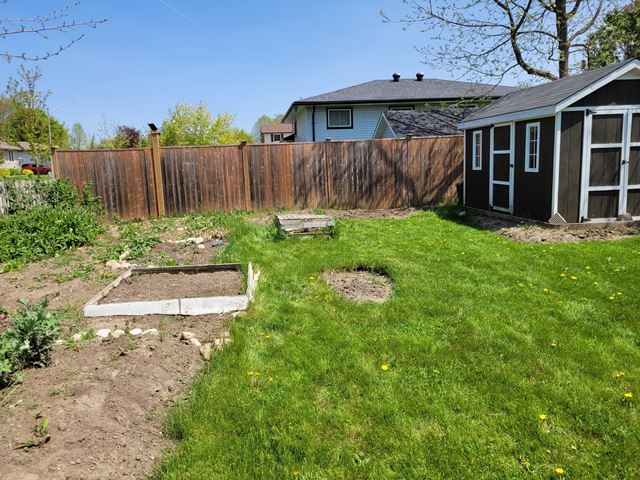
Unfortunately, it was a bit challenging to get the perfect set of "before and after" pics for my yard, but hopefully you can at least get a sense for the main areas I covered.
The first image shows a ground level before-shot of a wide, exposed section in behind my raised bed, towards the back fence (you can see the space more clearly in the second image). It is a zone that always ends up badly choked with weeds, so I was especially happy to lay down a super thick layer of chips there, as well as on the wide section of exposed soil along the back fence.
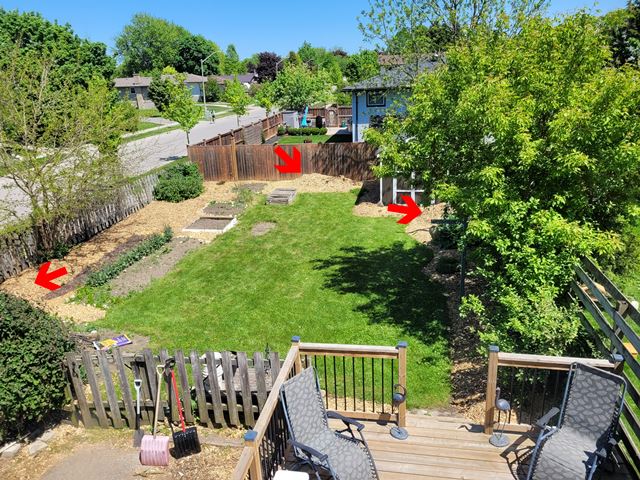
Next, is a view from one of our upstairs windows to provide a better sense for all the areas I used the chips. Basically, it was most of the exposed soil and garden beds around the perimeter of the yard - including lots laid down in behind and around our shed (another spot I am really happy to have a lot of cover mulch).
After I had laid a really thick layer everywhere I wanted chips, and separated out a pretty decent amount to share with my dad (probably 3 yards or so), I still had a good-sized extra heap. For the sake of neatening up the driveway, and to get the material located in a more useful location, I ended up building up 3 piles over top of the evenly spread material (indicated by the red arrows).
This way I have supply piles I can easily grab mulch from to thicken up certain spots, but I also have some places where I can have a bit more fun with the material. ;-)
The heap on the right hand side is actually directly in front of 3 backyard composters, so this is where I will likely get a bit more serious about trying some different things out.
I'm thinking about potentially setting up some bucket systems - maybe not even buried down into the soil at all - as well as a more basic waste burial approach to see if I can draw Red Worms out from the systems I have located there.
We've only had one rainfall since I laid the chips down (and it was fairly dry for a stretch before that). I'm hopeful we start to get more precipitation, so the internal zone of these chips gets nice and damp (I'm sure the wastes will help as well).
Anyway, just some preliminary thoughts for now - but I will be sure to keep you posted on how things develop.
Talk soon
Bentley
Helpful Resources
"When The Chips Are Down..." - May 20, 2023
I recently mentioned that I had a pretty cool, but unexpected, development to tell you about.
Let's start with a bit 'o' backstory...
Quite some time ago - likely a year or more by this time, I heard about an interesting service called "ChipDrop". Basically, the idea is that you sign-up, provide your address, and a local tree company will potentially drop off a big load of wood chips for you at no charge.
It sounded great to me, since I've had a big patch of exposed soil in my backyard - in the areas between various garden beds, composting systems, and my lawn - for a number of years. Every single year it is a royal pain in the neck to keep weed free!
Well...nothing came of it.
I never got a notice, let alone a delivery, and I mostly forgot about it (figuring it was probably harder to get a delivery in a smaller town).
Fast forward to spring of 2023...
When I was once again considering various mulch options, I found myself back on the ChipDrop website. I was quickly reminded that I already had an account, and when I logged in to have a look, I realized my first request wasn't even active anymore.
I wasn't super optimistic that submitting a second one would improve my chances, but I figured it wouldn't hurt.
I'm sure you can see where this is going...lol
Earlier this week, I received a text from a tree removal company saying they were in the area and had a truckload of wood chips.
12 cubic yards worth!
[For perspective, the most mulch I've ever had delivered in the past was probably 3 or 4 cu yards.]
I felt pretty uncertain about it (wondering if it could even fit in the driveway) - but thankfully, my wife seemed agreeable enough (lol) to serve as the deciding factor.
I quickly confirmed I was interested, and then rushed outside to make sure the driveway was completely ready to go.
Long-story-slightly-shorter, they showed up fairly quickly and the delivery went very smoothly. It wasn't quite the scary amount that I thought it might be, but 12 cu yds is definitely a LOT of mulch (pictures below don't do the heap justice).
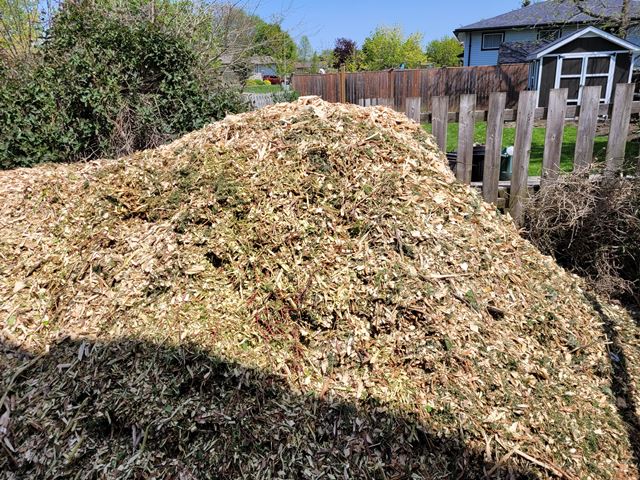
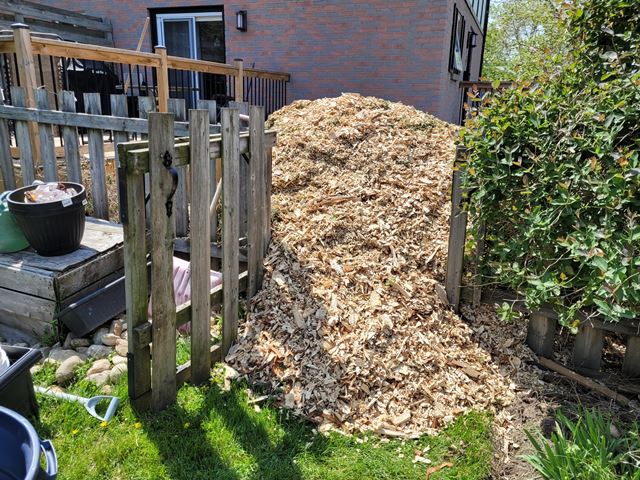
Honestly, the delivery of these chips felt like the ultimate, perfectly timed "gift from above". 2023 hasn't exactly been a stellar year so far in general, and I haven't really had a lot of vermicomposting inspiration either. It's safe to say that this massive heap of organic matter may help to change things on that front a bit! ;-)
---
I'll leave it at that for today, but in upcoming e-mails I'll share more about putting the mulch to good use, and of course, some ideas I have for getting worms involved as well.
If think you might be interested in ChipDrop (pretty sure it is widely available in Canada and the U.S.), be sure to check out this page first:
And this hilarious video they made: "Why ChipDrop is Probably NOT For You"
It's a fantastic idea, and a great option for people looking for large amounts of wood chips...but it's definitely not for everyone. Haha ;-)
Talk more soon
Bentley "Chip Rich" Christie
Helpful Resources
"Worm Shorts - 05/18/2023"
I've decided to try out a new approach, well-suited for when I have a handful of smaller things to mention and just want to fire off a quick e-mail about them.
Introducing RWC "Worm Shorts" (yep, that's an interesting visual lol).
---
Paper Pet Poop Bags -I didn't hear back from the subscriber that mentioned paper-based dog poop bags, so I ended up doo-ing (these jokes never get old) my own bit of research. I found two interesting possibilities (so far):
Pooch Paper- This one was apparently on "Shark Tank" (kinda funny, considering the name of the next one), and seems to basically just be little paper wrappers you use to grab poop.
Poop Shark - This one definitely has more entertainment value, and might be helpful if you are trying to get your kids involved.
----
Made Me Laugh - My "PS" about kinda wishing I had a supply of dog poop inspired some responses from subscribers. Carol said I should be careful what I wish for (loads of poop deposits might show up at my door step), and Paul M. was nice enough to offer to mail me a box o' crap from his spring yard poop clean-up. lol
----
1 Paper Towel - I recently learned about this 4-ish minute TED Talk video (which I was surprised to see is actually 11 years old).Very eye-opening. The only downside is that I probably used up 10 sheets of paper towel needlessly just testing out this cool method. Kidding aside, let's take this a step further...why are we even throwing out so much paper towel anyway? Imagine if all the paper towel, from all the public bathrooms in the world didn't end up in plastic garbage bags, but instead, got added to vermicomposting systems. Just something to think about.
----
Aeration for Underground Bucket Systems - Dale wondered about my in-ground bucket systems getting anaerobic, given the fact that they are basically buried in the ground with a lid on. The short answer is that, apart from all the holes down in the sides and bottom, I always have some space around these systems. Down below the bucket I like to have another false bottom of cardboard, and these buckets are never perfectly wedged into the ground, so there will always be some air flow. If you did want to improve on this, you might try some screened holes in the lid and just don't completely bury (or use something loose like wood chips).
Talk more soon!
Bentley
Helpful Resources
Passive VermicompostingManure ReportCompost Guy Educational ProductsBuy Composting Worms (USA)RWC E-mail Archive Page
"Dog Doo Vermicomposting (cont.)" - May 16, 2023
My last e-mail about vermicomposting dog waste seemed to spark some interest among subscribers. One of you reminded me about someone who should always be at least mentioned in any sort of discussion related to this topic:
Myles Stubblefield!
(Myles, I'm pretty sure you are a subscriber - so hopefully it doesn't feel too weird to have me greet you and then proceed to talk about you like you aren't even here - lol!)
Myles is a dog trainer who, some years back, was looking for an environmentally friendly way to deal with all his dog poop. As you might guess, this led him to discover vermicomposting.
Be sure to check out this great article about Myles in Buffalo Rising:
https://www.buffalorising.com/2021/02/buffalo-worm-works/
...and Myles' actual vermicomposting website:
Not only is Myles a fantastic vermicomposting ambassador, but I learned he even donates a very generous percentage of his profits to various canine (and maybe other) causes!
---
Moving on to the topic of poop bags...
My good friend, Brooke, replied to my e-mail, saying she has been having decent success breaking down "BioBags" in vermicomposting systems. This was interesting news to me, since I did a lot of experimenting with them years ago, and was frustrated by how long it usually took them to break down.
Hopefully this means they've changed up their formula so as to be a bit more biodegradable.
I'd love to hear from anyone that has tried vermicomposting BioBags - or any other biodegradable/compostable dog poop bags. I don't have dogs so I have to live vicariously through the results of my subscribers. haha ;-)
Maybe if I am really lucky, Myles will chime in with his thoughts on the matter. ;-)
---
OK, I think I'll leave it at that for today - but I definitely have more to write about soon. Apart from this interesting, and multi-faceted topic of pet waste vermicomposting (and in-ground bins), I have a bit of an unexpected development to report on - something that might actually lead to some new Compost Guy mini-projects in the not-too-distant future.
Talk more soon!
Bentley
P.S. Funny enough, the new development has me wishing I had a steady supply of dog poop to experiment with. ;-)
"Dog Poop and Roses?" - May 11, 2023
I'm not sure about you, but I can definitely vouch for the fact that life isn't always "unicorns and rainbows". So, when my good friend, Kyle, recently told me about how he was adding dog poop to his mom's rose bushes, I couldn't help but chuckle to myself.
Dog poop and roses...
I think that could be the title of my autobiography! lol
Kidding aside, while I do love the idea of putting wastes like this to good use (and it sounds like it has worked out well so far for Kyle), naturally, I tend to lean toward strategies that involve our wiggly little friends.
Kyle mentioned that he was adding straw as well - which I think is a good idea. If it was me, and I wanted to keep things super simple, I'd probably set up some form of "deep mulch" system in close to the rose bushes. And just add some Red Worms (maybe once it had sat for a while).
More likely, though, would be setting up some form of small in-ground system. In my mind, the perfect little pet poop processor would be something like an in-ground bucket vermicomposter.
This is something I've written about in the past, and I recently found a video I created on the topic (but never shared publicly) as well. Here is a page I put together this week with the video, plus links to other related resources:
Let me know what you think - and your thoughts about pet waste vermicomposting in general (it tends to be a pretty popular topic, so perhaps this will lead to some related follow-up e-mails as well).
Talk more soon
Bentley
P.S. If you do watch the video, I definitely recommend bumping up the playback speed a bit - somehow I managed to make the thing more than 18 minutes long! lol
P.P.S. If you haven't already, I recommend you check out my Passive Vermicomposting course as well (won't cost you a dime). The concepts and methods I cover in that series would actually lend themselves really well to any form of pet waste vermicomposting.